Showing posts with label UNESCO World Heritage Site. Show all posts

Tuesday, January 22, 2019

Cold and Windy Day at Antrim Coast, Northern Ireland

I was really excited to start the day trip to the wonderful Antrim Coast, Northern Ireland. It was a full day trip from Dublin city and I would recommend this tour organized by Extreme Ireland. As instructed in the voucher, I have to wait at The Old Stone Church and tour would start at 6.30 am. Since it is just a few minutes walking from Ha'penny Bridge to Suffolk St., I have no problem reaching the place except that it was raining and definitely cold enough for people from the tropical country.  

Well, apparently I was not the only person to feel excited because there were a number of people were already waiting to  the trip. 

On the mid-way, the bus stopped at a petrol station where we could get our breakfast there. From there, we were brought to the first stop, Dark Hedges. This is a terrific place for those who want to see something different in natural landscape.  The beech trees along Bregagh Road (located between Stranocum and Armoy), formed a canopy which made the place appeared dark (hence, the name) and a bit spooky in the photos if taken at the right angle. This place has gained its popularity as it was featured in the movie, Game of Thrones. I have never watched this movie though.

It was cold here so technically I was having difficulty taking photos of the surrounding. I refused to give in though . After 15 minutes, I returned to the bus. My fingers and toes started to feel numb already. There was heater in the bus, so problem solved.


From the Dark Hedge, we headed to the coastal area, ie the County Antrim. It was still raining so I thought it wouldn't be easy here too. So this place we were heading to is called Carrick-a-Rede which is one of the many tourist attractions owned by National Trust.

Before arriving the tiny island of Carrickarede, a walk of less than a kilometer is necessary. With rain and strong coastal wind, it made things even colder but I could see the glimpse of beautiful scenery around this area. I tried my best operating my camera without getting it 'soaked' and I would say I was glad to visit this place. It is  true what people have said about UK weather, unpredictable and surprising. I did not expect the sun to show up anytime but it just did. The land became a lot more beautiful and I took several deep breath to enjoy the fresh air and picturesque landscape.


The white limestone cliffs made the area looked lovelier. There were several islets but I have no idea what they are called, which made the view even more interesting. Every time the sun came out, I took every opportunity to get the nicest photo, and to warm myself a bit.


It was quite hard to control the exposure due to overcast weather. I still think I need to visit this place again when the weather is so much better and warmer. I think I can spend the whole day sitting here and enjoying the beautiful landscape.


Carrick-a-Rede rope bridge viewed from the higher elevation. 


Remember the saying "every cloud has a silver lining" or 'there is always sunshine after the rain"? Well, this day was absolutely perfect to apply these quotes. Not only sunshine, but there was rainbow too. AND THERE WERE 2 rainbows!! What a lovely moment.


After half an hour, everyone started to walk back to the bus, taking the other route. I was still looking for nice views to feed my camera. With the sun coming out as and when it liked, I had limited numbers of photos of this area. However, the fenced green field looked great. Probably looked better with a big group of fat sheep or goats or cows.


Before getting on the bus, I dropped by a cafe to get something for me, hot chocolate and souvenirs. The cafe was a cozy place to hang out too.

We stopped for lunch in a place which I could not remember exactly where it was. Had a big bowll of potato soup and could not finish it. What a waste.

I was so excited when the driver announced that we were approaching Giant's Causeway. But from a distance, I could see a dark grey cloud was covering the coastal area, which turned me off a bit. But positivity never fades when it comes to traveling. I was still hoping there would be sunshine. Would be pity if I couldn't enjoy the visit to Giant's Causeway even for a minute.

The bus driver did not drop us directly at the Giant's Causeway Visitor Centre. He told us that we could just walk a bit to Giant's Causeway for free, rather than passing through the visitor centre and required to pay for the entrance fee. 

Giant's Causeway is another UNESCO World Heritage site which I have been yearning to visit. The myth of Giant's Causeway is interesting but I am more interested on the geological formation. It amazes me a lot to learn about the formation of hexagonal basalt columns. It all started with cooling of the lava and later cracked to form the hexagonal shape.


For the first time, I saw a foam-like substance on the water surface and some were on the rocks. When the wind blew strongly, the wind would lift some foams from the surface and some got onto my windbreaker. It was quite smelly to be honest. Those foams formed due to the protein-based substances which coat the air bubbles causing them to stick together. This was another scientific knowledge acquisition for the day.


Just like what I have experienced at Carrick-a-Rede, the same happened in Giant's Causeway where the wind blew much stronger and nearly blowing away my beanie and MYSELF. All I need was a strong and steady stance on a flatter surface. The sun came out couple of minutes before I had to leave this magical place.


In less than 1 hour, the bus left County Antrim heading to Belfast, but it stopped briefly close to Dunluce Castle for a quick photo stop. This ruined medieval castle is located on a cliff with steep slope around it. This castle is featured in the popular TV series, Game of Thrones. Well, I have never watched this TV series but I have a thing for old castles.


While the bus headed to Belfast, I could enjoy the view along the route and I could say the views along the route were quire impressive and not boring. A combination of grey sky with a little bit sunshine seemed odd but it looks cool enough to me.


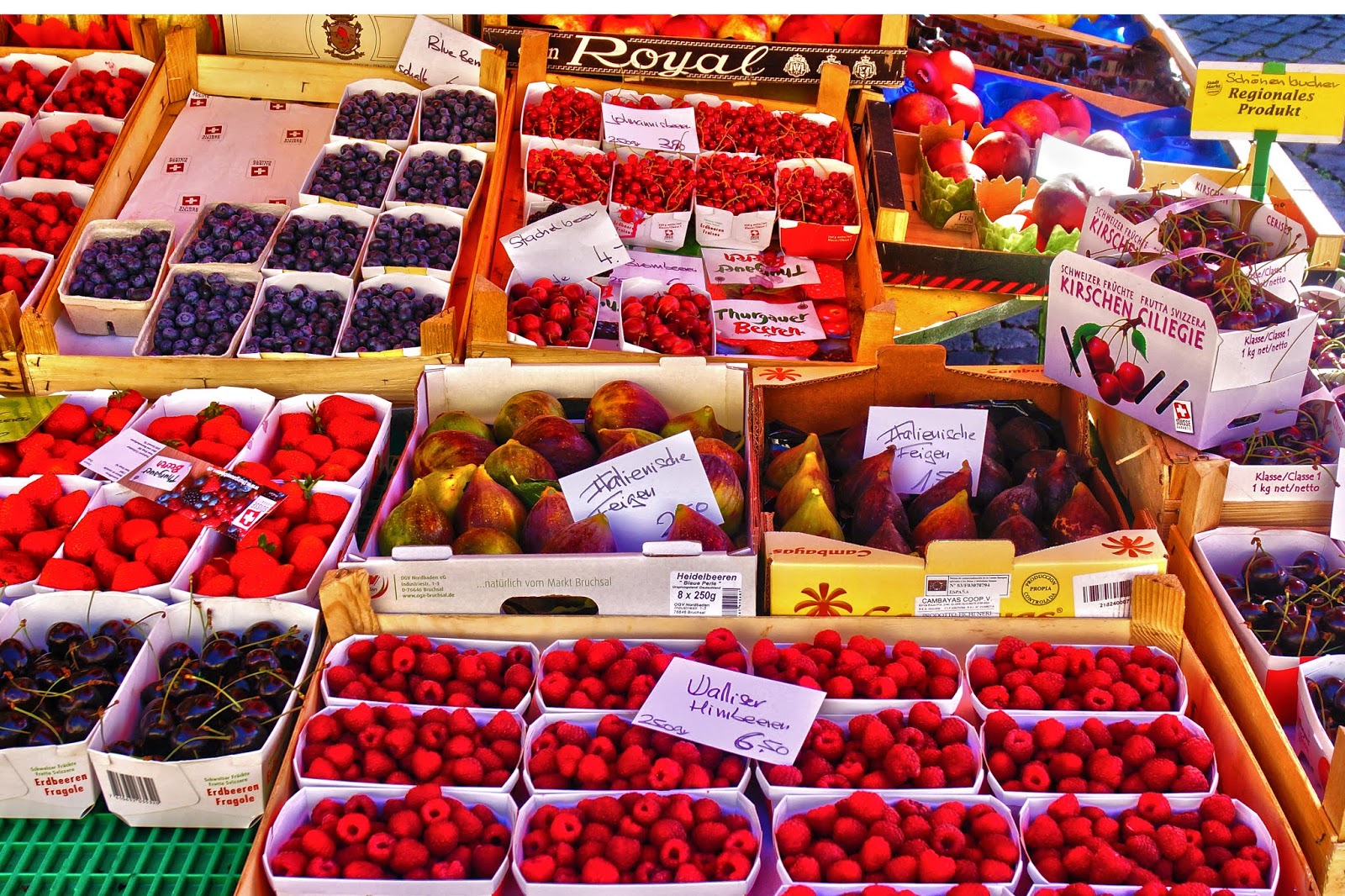


Out and About Basel Old Town.


I had the opportunity to visit Switzerland in June 2018. I know most travel freaks would say it is a bloody expensive country to visit. Well, I can’t deny the fact that Switzerland is indeed really expensive for most backpackers. How did I survive? Let’s just say I had some help from several friends in France and Switzerland.

             After completing some important stuff in UK, I flew to Basel with RyanAir. Prior to my arrival in Basel, a good friend of mine, who was staying in Niffer, offered to pick me up at the airport. By the way, Niffer is a small but charming village in France which is close to Basel. I stayed at Niffer for 4 nights. So basically, I did not stay at Switzerland at all in those 4 days. It was a lot cheaper to stay in Niffer. However, public transportation was not available so my friend seemed to have everything organized for me.

            What is there to do in Basel? As usual, I always couldn’t find enough time to do proper research and plan my trip. I started my day early in the morning so that I would have more time to see Basel. So I headed to the Tourist Information Center at the Bahnhof (it means train station in Deutsch) and got myself a map.


            What I liked about this map was that it provided 5 routes for walking tours. Each route was named according to famous, prominent people who lived in Basel in the early years, namely the Erasmus Walk, Paracelsus Walk, Burckhardt Walk, Platter Walk and Holbein Walk. Each walk caters specific section of the city. One can chose to see the historic heart of the city, medieval alleys, the past and present of Basel, crafts and university section and the broader section which covers both sides of the Rhine river.
Naturally, I have picked the longest route, which is the Holbein Walk, but with some improvisations. This walk starts at the Old Town heading toward the Munsterplatz (the cathedral square) and Old City Wall, make a loop to return to the Old Town.
Marktplatz – Rathaus - Guild houses – Munsterplatz and Munster – Kunstmuseum – Wettsteinbrucke – Obere Rheinweg – Mittlere Rheinbrucke – Eissengasse and “Lallekonig” – Marktplatz

Marktplatz – a market place, where a market selling fresh fruits, plants and food are available in the morning. Nice and cozy place for people watching or perhaps a cup of coffee.


Rathaus – an ornate building painted red which is also serves as the Town Hall of Basel. It’s worth to check out the murals and decoration at the interior compound.


Guild Houses – by definition, guild houses are buildings being used for meetings and other purposes which were historically significant. Many of these guild houses are now museums. The word ‘guild’ itself refers to fraternity, brotherhood, fellowship etc.

Munsterplatz & Munster -  simply means a cathedral square and cathedral which originally was a Catholic cathedral but now it is a Reformed Protestant church. It is the main landmark of Basel with is easily distinguished by its coloured roof tiles.


Residential building at the cathedral square

Kunstmuseum – a must visit for art lovers. It has a huge collection of public arts including Renaissance arts and works from the 19th impressionists. It is also the largest art museum in Switzerland. Entrance fee is CHF 26.

Wettsteinbrucke -  one of the three bridges in Basel. A good spot to take some nice photos with the minster as the background

View of the church from Wettsteinbrucke

Obere Rheinweg – a pedestrian and cyclist path lined with shady trees which is a good spot to view the lovely scenery on the opposite side of the river. The emerald blue river makes a breathtaking view. One should spend some times during the day and night to see and feel the difference in the atmosphere. It has been my favorite spot in Basel so far.


Mittlere Rheinbrucke – it is called the ‘Middle Rhein Bridge’ and a historic bridge in Basel. I spent more time photographing this bridge at different angles and apparently the most picturesque bridge.


I took some rest, having crazy expensive waffle ( CHF 11) to replenish my energy. There is a McDonald’s at the Marktplatz but my taste buds seemed to reject it.


Next, I picked the Erasmus Walk to explore the historic heart of this city. The Celts and Roman built settlements here and currently being a residential zone, museum and administrative museum district. For this route, one needs to walk uphill but I assure you that it wasn’t that tough. Be careful when walking as the cobbled pathway is not always a pleasant surface to walk on. 

Martinskirche - Rheinsprung – Blue and White House – Augustinergrasse – Pfalz and the view over Rhine – Frei Strasse – Rathaus

Martinskirche - a lovely church with Romanesque architecture


Rheinsprung – a street in the Old Town of Basel. Some nice view can be seen along this street


Blue and White House – 2 semi-detached mansions in Rheinsprung built for the Sarasin brothers (Lukas and Jakob) whom their descendants are the founders of the Bank Sarasin & Cie in Basel.

Augustinergrasse – another street after Rheinsprung with several nice buildings and also the location of the Natural History Museum of Basel. 

Enjoying this view for some reasons.

Pfalz and the view over Rhine – a viewing terrace next to the cathedral which offers a wonderful views over the Basel Old Town.

Freie Strasse – from the cathedral, i walked downhill to this shopping street (with no intention to shop at all) back to Rathaus.

I realized that I still have several hours more left before taking the train to Luzern, so I took an improvised Platter walk to see Basel a little bit more.

For this walk, I wanted to see the Spalentor,  which means Gates of Spalen. It is the most beautiful gate of the three gates in Basel. These gates and a short portion of the city wall become the city's heritage.

Gate of Spalen (Spalentor)
      Several nice buildings can be found for example a restaurant in the former craftsman's district, the building of the Basel University Graduate School at Petersgraben and houses at Petersplatz.

A restaurant at the former craftsman's district

Graduate School of Basel University

Nice houses at Petersplatz
Basel is great for walking and everything can be covered within a day, unless if one plans to visit the museums and shop around. 

Thursday, January 12, 2017

The Andalucia : Appreciating the Islamic Heritage

Spending couple of days if the different regions of Spain was one of my most memorable experience that I would not forget. Spain was definitely one of my favorite countries, due to the culture and I'm loving the language it self (as a result from watching too many tele-novelas). From the flamenco, bull-fighting, Spanish tapas and the long history of Muslim conquest, these are mostly the things that I was looking for as part to garnish my general knowledge of everything. 
I will emphasize more on my visit to the Andalusia region, which has a long standing history on the Muslim conquest upon the arrival of Ummayad's from Damascus in year 711. The two Andalusian cities famous for the influence of Moors cultures are Cordoba and Granada. I made a day trip to Cordoba from Seville (by train). And the next day I departed to Granada by bus, and put up a night there.

Cordoba


I began the day early from Seville and headed to the train station to board the RENFE train to Cordoba. I managed to get a cheap ticket as I have booked it months earlier. I was so longing to see the Great Mosque of Cordoba, which is also known as the Mosque-Cathedral of Cordoba and The Mezquita. Based on the long history of the Great Mosque of Cordoba, this mosque has become a significant value to the Christians. The entry ticket costs 8 euro for an adult.


Outer design of The Great Mosque of Cordoba
The construction of Great Mosque of Cordoba began in 784 A.C and was supervised the Emir of Cordoba, Abd ar-Rahman I. It was also believed that the original copy of Al-Qur'an was placed in this mosque during the reigning of Abd ar-Rahman II. The next Emir of Cordoba, Abd ar-Rahman III built a tower at this mosque around the 9th century, whereas Al-Hakam II supervised the enlargement of this mosque and refined the design of the mihrabs.

The tower built by Abd ar-Rahman III but now used as bell tower
The Great Mosque of Cordoba is well-known by its impressive interior design. The architect of this mosque created the horseshoe arches, on top of the lower arched. The white and red stripes on the arches are actually an arrangement of blocks of sandstone and marble, making the main praying area even more amazing. There are more than 850 arches made in this area.


Internal view of the Great Mosque of Cordoba with the stunning arches (photo credit : Proyecto Espana)
Another beautiful structure in the Great Mosque of Cordoba is the mihrab. A ceiling resembling a sea shell was carved from a huge marble block. The spaces at the both sides of mihrab were embellished with golden tiles. It is even more amazing to see the neat and fine of Islamic caligraphy and patterns on the arch, the mihrab and on the wall.


The mihrab in Great Mosque of Cordoba (Photo credit : Arteazuer Blogspot)
The final modification stage of this mosque includes the construction of walkways at the exterior part of the mosque complex dan the setting up of a garden know as Patio de Los Naranjos. This area serves as a place to do the ablution before performing the prayers. There are many orange trees (that's where the word 'Naranjos' comes from, it means oranges) and also a lovely fountain. The construction of this mosque was fully completed in year 987 under the the supervision of Al-Mansur Ibn Abi Amir. This mosque was the most beautiful one compared to the thousands of existing mosque  in Cordoba during this period, and it is still the most beautiful until today.

The site of mosque construction was actually regarded as sacred place to the Romans and they have built the Roman temple long before the conquest of Islam. After the Christian reconquest of Cordoba in year 1236 by Ferdinand III, this mosque was converted to a cathedral with major renovations being done. Though major renovations were done, most of the Islamic architecture and design were preserved by the Christian rulers, hence the name Mosque-Cathedral of Cordoba.

This mosque is part of historic center of Cordoba which has been gazetted as UNESCO World Heritage Site in year 1984. This is due to its outstanding artistic creation and religious architecture of Islam, as well as significant influences on Western Muslim art. Several structures were built after the fall of Moors empire such as the Calahorra Tower and the Alcazar,  which were connected by the Roman Bridge. There is also and archway as the entry point to this historical city, namely Puerta del Puente.
The Roman Bridge connecting the Puerta del Puente and Calahorra Tower
Puerta del Puente


Try to avoid the ladies holding some kind of herbs on their hands, in this historic city area. They don't speak English at all and they would try to get attention by approaching the visitors, grab the hands and try to look at them, as if like fortune telling. Even if one refused, they will keep talking in Spanish, and money from visitors. Euro 5 at least. Avoid eye contact by all means.

Another interesting Moorish city worth visiting and just outside Cordoba is the Madinat Al Zahra. However, getting to this place was not that easy. One will need to take a taxi, or alternatively, take the bus serviced by the tourist office at certain period of the day. This service is not unavailable on Monday though.

Granada

Granada is a city located at the foot of Sierra Nevada. It is such a peaceful city and less crowded compared to other cities on the Andalusia region. Despite the end of Moorish conquest, and the re-conquest of the Christianity in the 16th century, the elements of Islam are pretty prominent in Granada. Based on my observation, many Muslims reside in Granada today, based on the fact that many business outlets are run by the Muslims. They maybe come from the north African or the Middle Eastern countries.

The precious gem from the Moorish empire is of course the Alhambra, built in the 11th century. It was initially functioning as military base and on the 13th century the royal residential area, higher officers and the elite armies were built during the Nasrid dynasty. The entrance ticket costs 14 Euro.

Generalife garden, one of stunning attraction in Alhambra


View of Sierra Nevada from Alhambra

The most impressive thing I admire most about Alhambra is the evergreen Moorish architecture and design are well preserved at every corner of this lovely heritage site. The halls and the gardens are embellished with the Islamic calligraphy and they are simply stunning. However, there are several structures and buildings which are not based on Islamic concept, especially after the end of Nasrid empire. Among them are Palace of Charles V. Londaraza's Garden and Santa Maria de Alhambra church.


Court of Myrtles


Generalife, Alcazaba fortress, Nasrid Palace and several halls and open space such as the Royal Bath, Ambassadors Hall, Hall of the Two Sister, Hall of Mullioned Windows, Court of Lions, Hall of Justice and several others are the main attractions in this lovely Alhambra. Construction of each structure and space was done in stages and very much dependent on the incumbent ruler's desire. For example, the Court of Lions and the Alcazaba fortress were constructed during the ruling of Sultan Mohammed V. Other than this, the Comares Palace and Gates of Justice were constructed during the Sultan Yusuf I. However, the Generalife Garden underwent several reconstructions and modifications and the actual designer of this garden is unidentified to date. 


Besides Alhambra, Albayzin is another Islamic heritage in the Andalusia. It is located just opposite of Alhambra and it has strong Islamic influence until today. During the Moorish period, there were 30 mosques in this sector but these mosques were demolished and replaced by churches during the Christian reconquest. 


Andalusia has indeed displayed the grandeur and glorious Islamic ruling once upon a time. It is absolutely a good move to preserve these legacies which enables the travelers to learn more about the history and culture, especially to those who love to explore about Islamic history in the Europe.